Winglet Glasflügel 304 Review
| Pilot: | Frank Beerhenke |
|---|---|
| Club: | LSV Münsingen Eisberg |
| Airfield: | Eisberg |
| Glider: | Glasflügel 304 – Serial Number 206, 1980 |
| Registration: | D-6836 "GH" |
I had scheduled the 3000-hour inspection for my beloved Glasflügel 304 for Autumn 2024. I had considered adding winglets at that time but hadn’t yet made a final decision. When scheduling the 3000-hour inspection in spring 2024, the two Christians at the LTB (Luftfahrt- und Baubetrieb – Aircraft and Construction Works), Streifeneder, informed me over coffee that the mold set for the winglets was undergoing revision and that my winglets could be manufactured in advance. The order was placed immediately. The 304 then went to Grabenstetten in August, and my wife and I went on vacation. The first photos from Christian Walliser of the winglet installation, and especially the fully assembled aircraft at the LTB, were breathtaking.
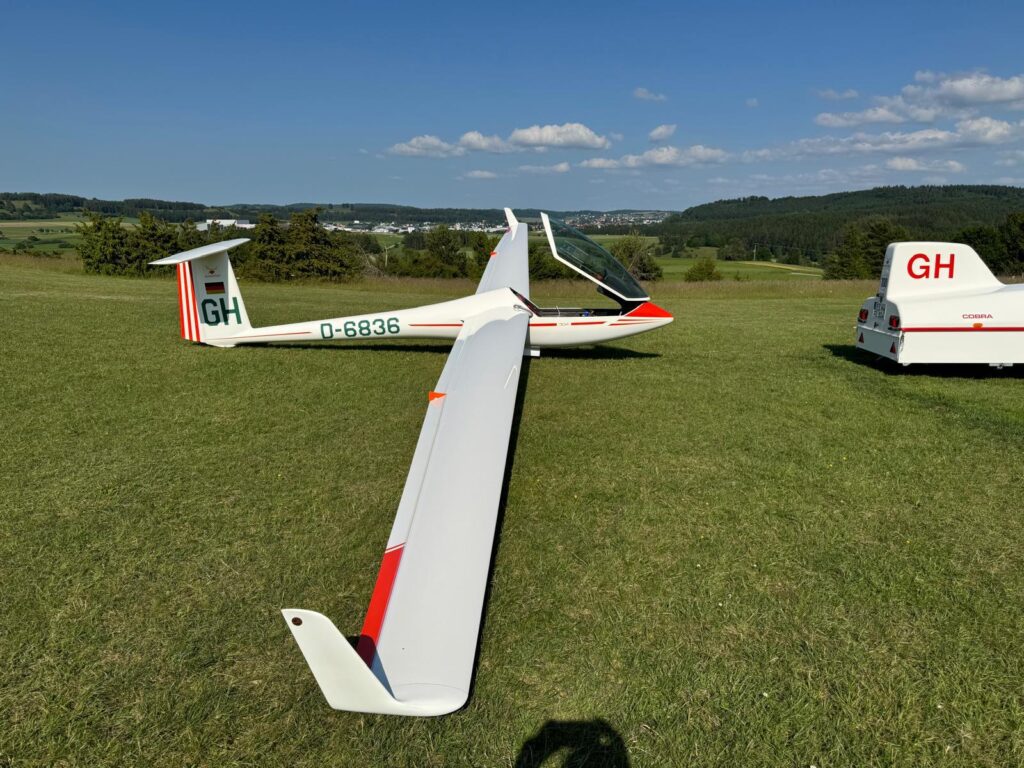
Weeks later, I picked up the aircraft from the LTB. I was completely overwhelmed. So many small details, so meticulously arranged. A bearing replaced here, the battery box brought up to standard there. The completely new seals inside and out. Everything simply radiated impeccable quality. The entire wing control system was now without any play; everything was perfect. We also replaced the water bags during this process. It’s sensational that original components from the original Glasflügel supplier, which Streifeneder had since acquired, were used. The design of the water drain valves, a complex stainless steel construction that I handled for the first time during the replacement, would impress any mechanical engineer.
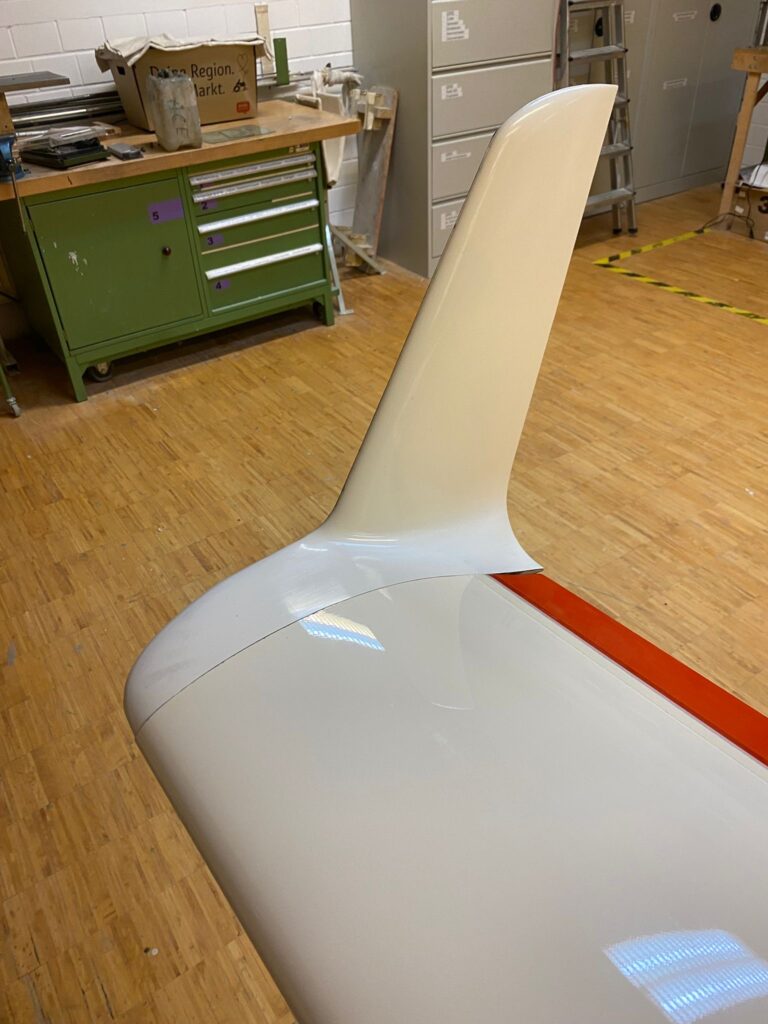
Now back to the winglets: The winglets are absolutely perfectly manufactured; even the color was mixed so precisely that there’s no discernible difference from the original paint on the wing from 1980. There’s absolutely no gap between the wing and the winglet—you couldn’t fit a piece of paper in there. The profile transition is also extremely precise. The satisfying click when attaching and the self-locking mechanism of the winglets conveys truly perfect aircraft craftsmanship. The low weight of the new carbon fibre winglets compared to the old wingtip is also impressive. The old wingtip can still be used for flying, and the way the wings are secured in the trailer remains unchanged. Since purchasing my 304 “GH” in 1998, my aim has been to preserve the aircraft’s original structure and paint scheme as much as possible. This aircraft was, after all, featured in the historic press photos of the 304 three-plane formation from 1980. With this in mind, I had given much thought to whether the winglet installation might detract from the overall appearance of the 304 – far from it! Now the aircraft looks much sportier and more elegant.
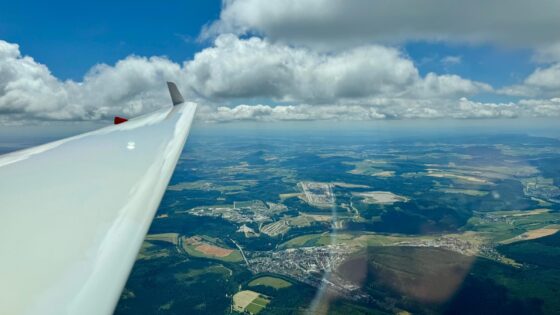
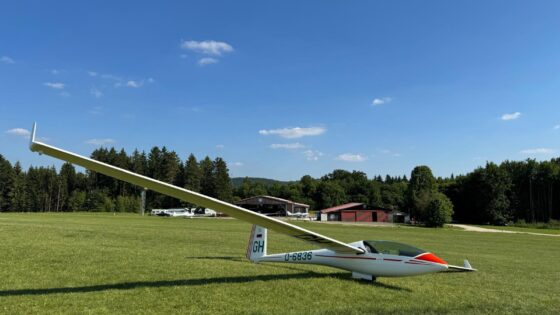
My first flight after the 3000-hour inspection and the winglet installation took place in November at the Münsingen iceberg.
Even during the aerotow takeoff, I noticed that the roll control was more effective and there was no tendency for the wing to drop. The added wing wheels now also allow for takeoffs without wing grips, if necessary.
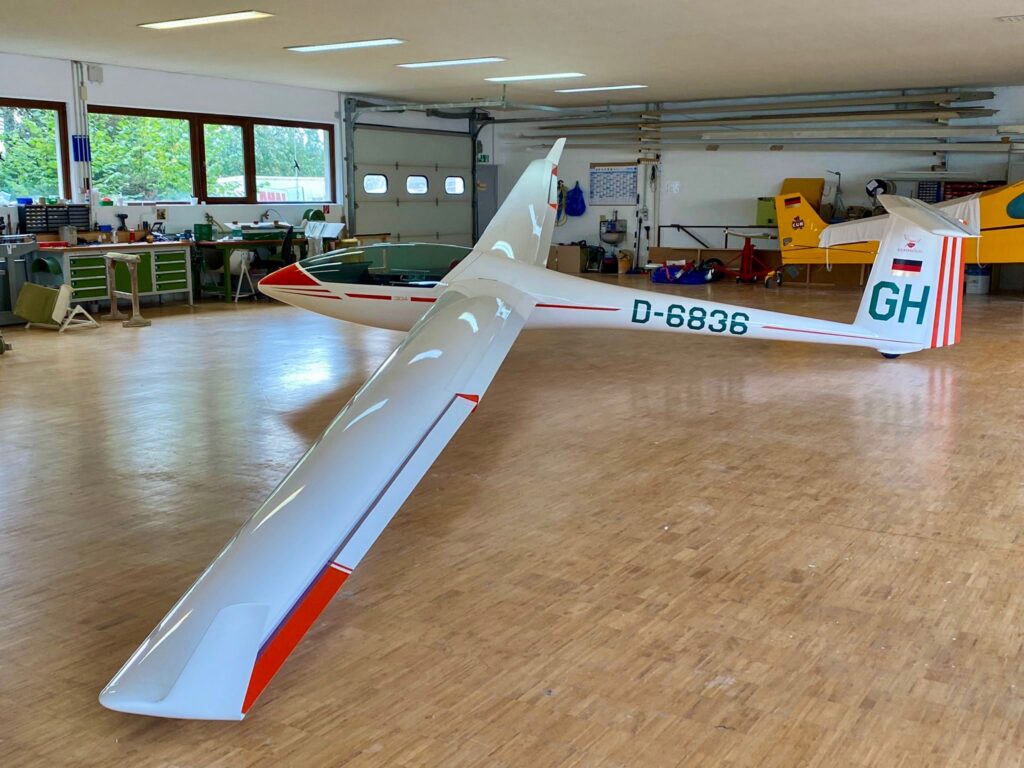
While circling, I found that bracing against the turn direction is almost unnecessary. The tendency to yaw around the vertical axis during strong bank angles is gone. This was also evident later in the year during initial flights in the mountains of southern France. The aircraft circles even more smoothly and beautifully. It simply feels “calmer” and “more stable.” This is certainly also due to the completely new sealing. The circling speed is noticeably reduced; in my case, it’s now around 75 to 80 km/h.
After touchdown, it’s now possible to roll out for a longer controlled roll, as the wing dips later. This proved extremely useful during the season, allowing the aircraft to roll almost to the trailer at the edge of an iceberg, in conjunction with the large wingtip wheels. These also provide very effective protection for the ailerons when taxiing from concrete runways, such as the one in Puimoisson. With the wheels, the wing sits higher than with the original fiberglass wingtips on the original wing without winglets.
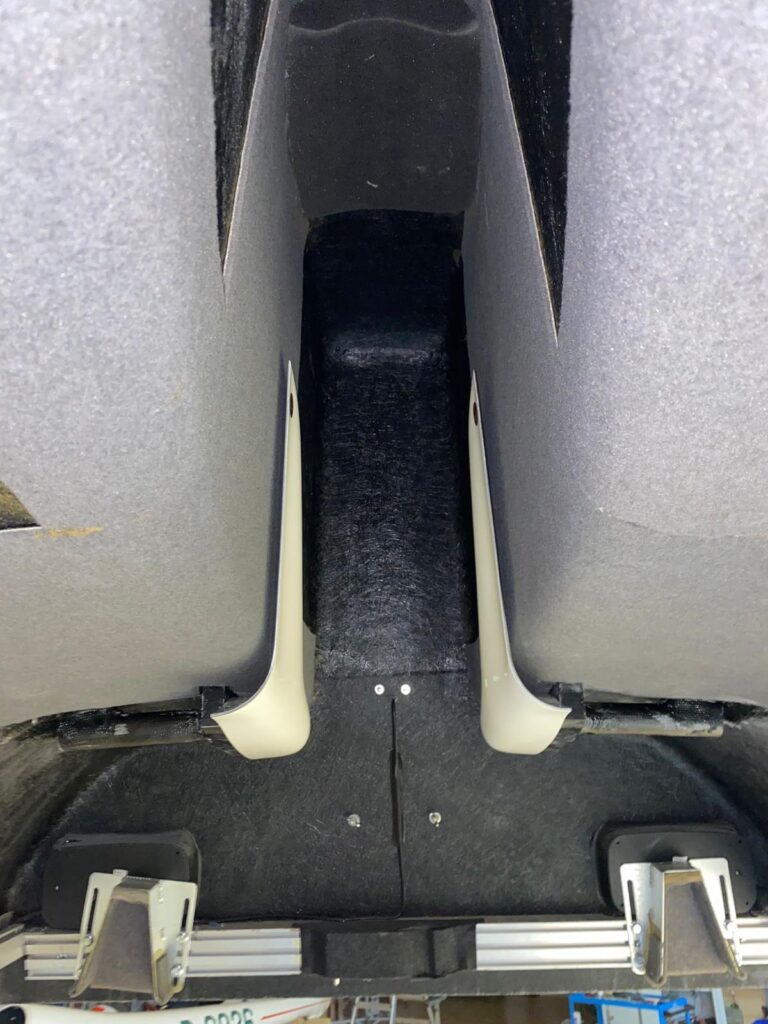
So, after my maiden flight in the tapered 304, I climbed out of my beloved aircraft with a broad grin.
Why is adding winglets to the 304 worthwhile?
Significantly reduced tendency for the wing to drop during aerotows.
Earlier response of the ailerons during takeoff.
Smoother circling characteristics.
Virtually no need for bracing while circling.
Noticeably lower circling speed.
No more wobbling around the vertical axis in turbulent thermals and at high bank angles.
More directionally stable straight flight.
Longer controlled rollout distances are possible because the wing drops later.
Takeoff and ground handling are significantly improved by the winglets and wing wheels.
A substantial visual enhancement of the overall aircraft.
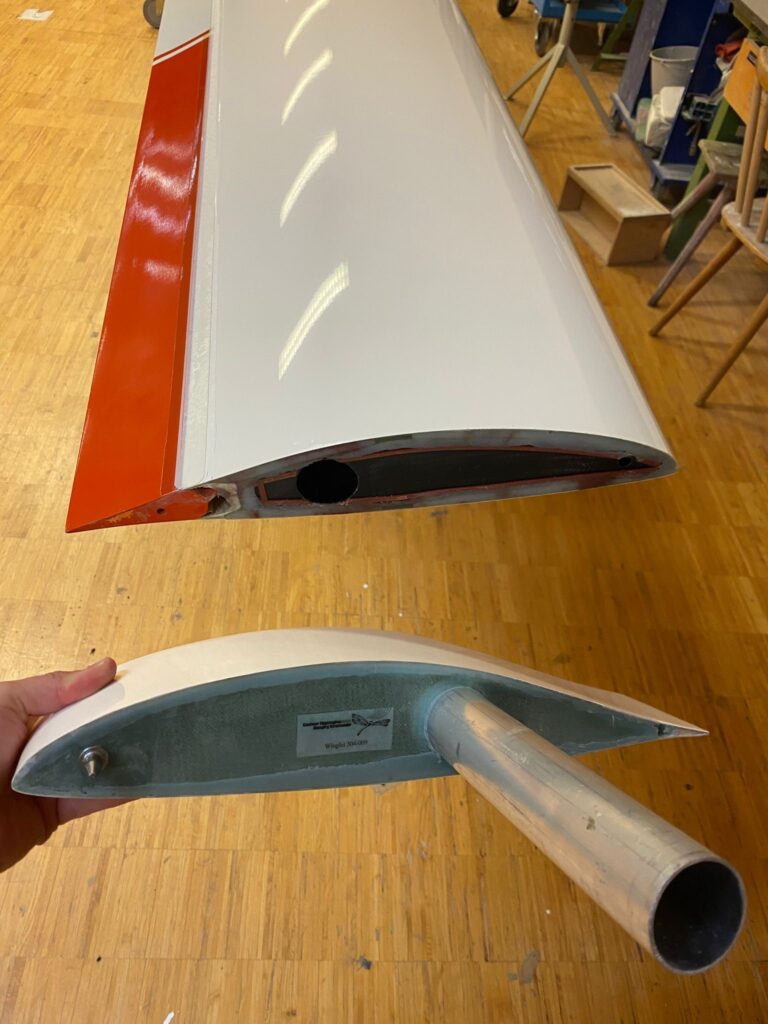
As part of the 2025 annual inspection, Christian Walliser built me perfect, custom-made winglet mounts for my Cobra trailer. The winglets are now neatly and securely stored in them and don’t get in the way in the cockpit. The original wingtips can also be safely stored there during flying days. A very worthwhile investment for these valuable winglets.
Therefore, I am very happy and more than satisfied with the upgrade to my 304 with serial number 206 “GH”. Excellent work is being done at LTB Streifeneder, including many pleasant conversations about fiberglass wings.