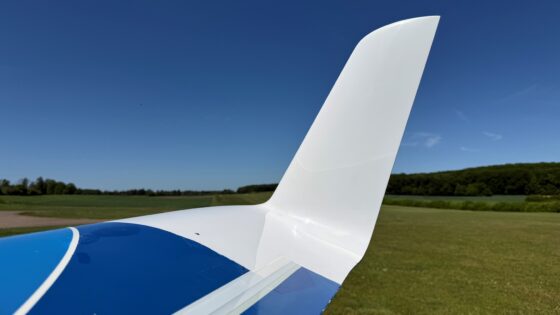
Kestrel Winglet Review
| Pilot: | Reiner Haist |
|---|---|
| Club: | FG Freudenstadt |
| Airfield: | Musbach EDSU |
| Glider: | Glasflügel Kestrel |
| Registration: | D-0111 "SV" |
To answer any potential questions right away: No, I have not received, nor do I expect to receive, any financial benefits from the company Streifeneder should my report prove positive. I am also happy to have my name mentioned, as the following report reflects my absolutely honest—albeit subjective opinion.
During the most recent inspection of my glider at Streifeneder, I learned that the long-awaited winglets had finally received certification; out of curiosity, I immediately asked about the price. The figure I was quoted was quite steep! However, after having the basis for the pricing explained to me, the total—while still high—made a lot more sense.
With over 1,000 hours of experience flying my Kestrel, I was convinced that the flight characteristics of this vintage glider wouldn’t improve all that significantly with winglets. The system already worked so well that, for instance, I could hardly imagine better thermal-circling performance.
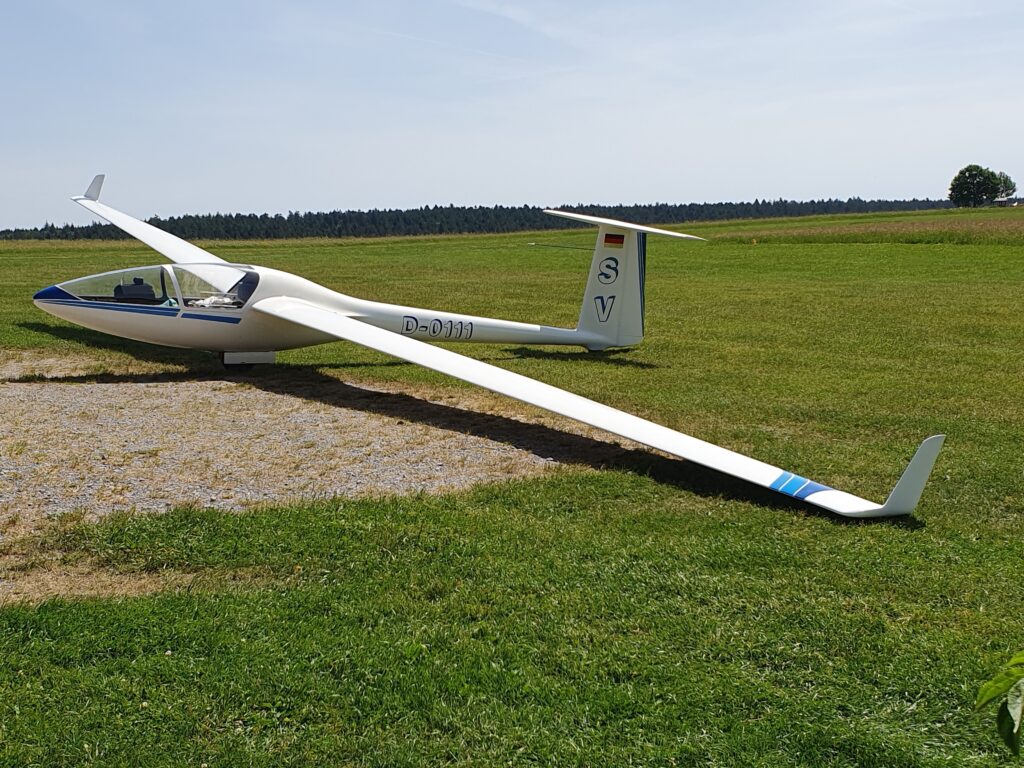
But they really do look great… An argument that I found almost impossible to resist was the fact that I could get the winglets with part number 3—a perfect match for my Kestrel (serial number 3). So, the retrofit was carried out.
The new winglets were fitted to the wings with such precision that the gap is barely visible. A perfect job! One minor downside is that no pin was supplied for removing them—surely a negligible cost. Still, it’s easy enough to find a suitable replacement or cobble one together yourself; you can always take inspiration from the little pins used on Schempp-Hirth gliders.
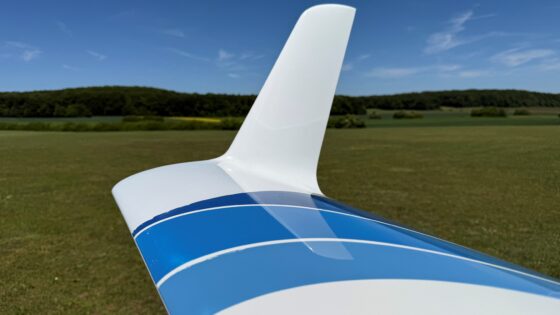
Then came the test flight! First off, the visual appeal was striking—a view shared by several of my fellow club members. After an initial flight lasting about four hours, I was left with the distinct impression that the aircraft’s overall performance had improved significantly, even if I couldn’t describe every detail precisely. I have now had the winglets installed on the aircraft for 35 hours and can articulate my—admittedly subjective—impressions in greater detail.
The aircraft now feels much more “planted” in the air without sacrificing agility. This is most noticeable when circling; I no longer need to apply the counter-pressure and various corrective inputs that used to happen almost subconsciously. The new flying style requires very few control inputs; the aircraft circles stably almost on its own. It is now possible to circle at lower speeds than before, though the machine likely climbs better with a bit more airspeed. One has to optimize this depending on the situation.
Overall, the winglet retrofit has resulted in a surprisingly significant improvement in flight characteristics—at least for me. However, it doesn’t come cheap! I rather doubt that the cost can be fully recouped upon resale, but the flying experience has become so much more positive that I do not regret the investment.